OCI Console 2.0
A future design vision
The Ask
I was tasked with creating a five-year vision for the console.
Utilise design thinking tools to deliver a provocation to the business in a short timeframe.
Key questions guided our approach:
- What customer pain points can we address?
- What industry trends should we anticipate?
- Don't be constrained by what we have now
What was Delivered
We created two prototypes and presented them to senior leadership. These not only sparked discussion on how AI could be integrated into the console but also influenced a new project, which was reimagined after our design vision work.
Lasting Impact
The project was so well received that the methodology became a model for other forward-looking initiatives that I was later asked to lead.
Discovery
Stakeholder interviews
I ran workshops with over 40 people from across the company, making sure the vision reflected how the business actually worked and what it needed.
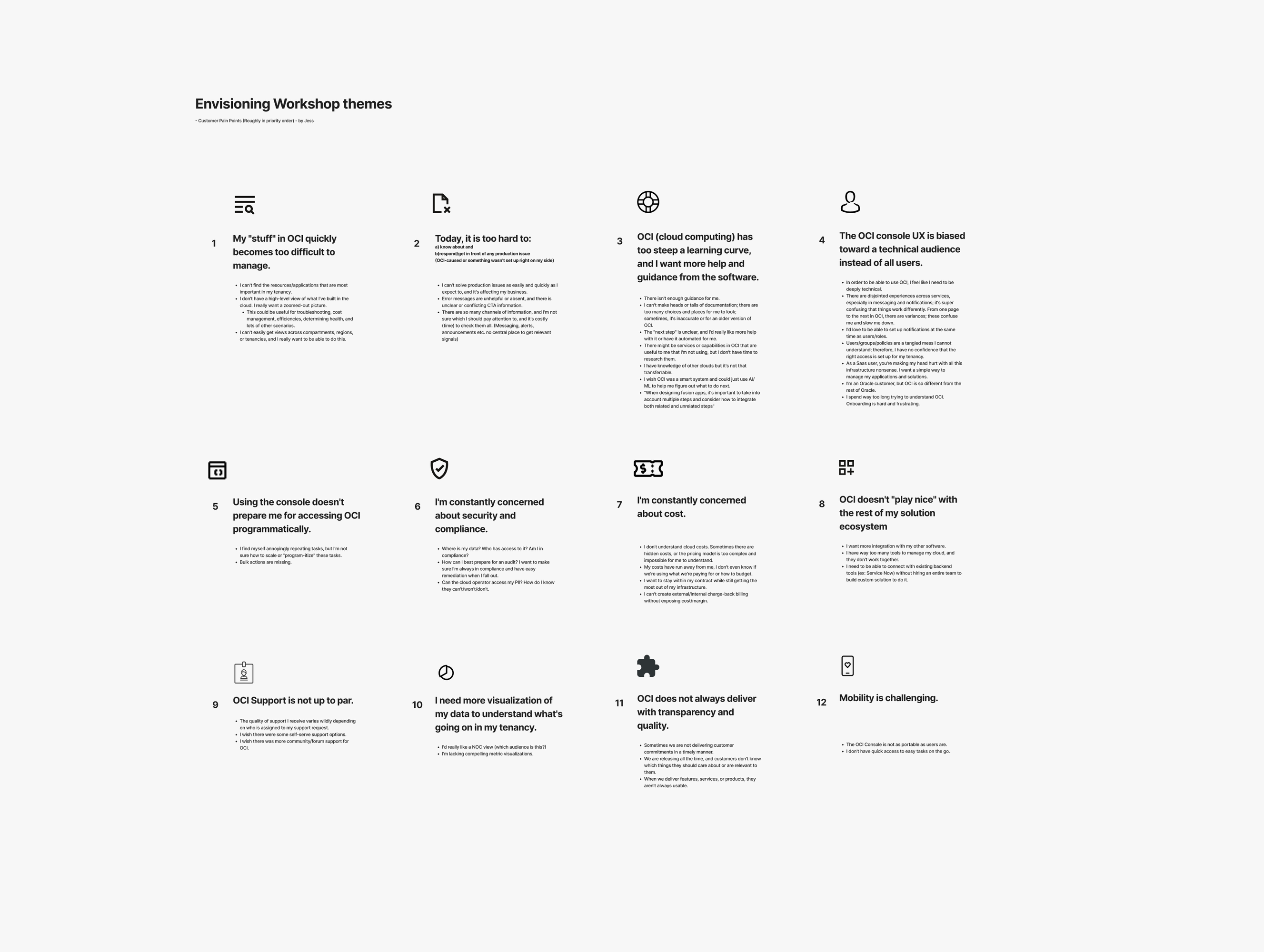
Workshop output
"Customers want help with best practices and guidance on how to best operate and manage their cloud environments. They want us to automate their workflows and deliver unified experiences rather than silos."Synthesized from 40 interviews with stakeholders
A Team and a plan
Building on the workshop insights, I assembled and led a cross-functional team of four principal designers, one UX researcher, and a product manager. As design lead, I set the direction and established how the team would work together.
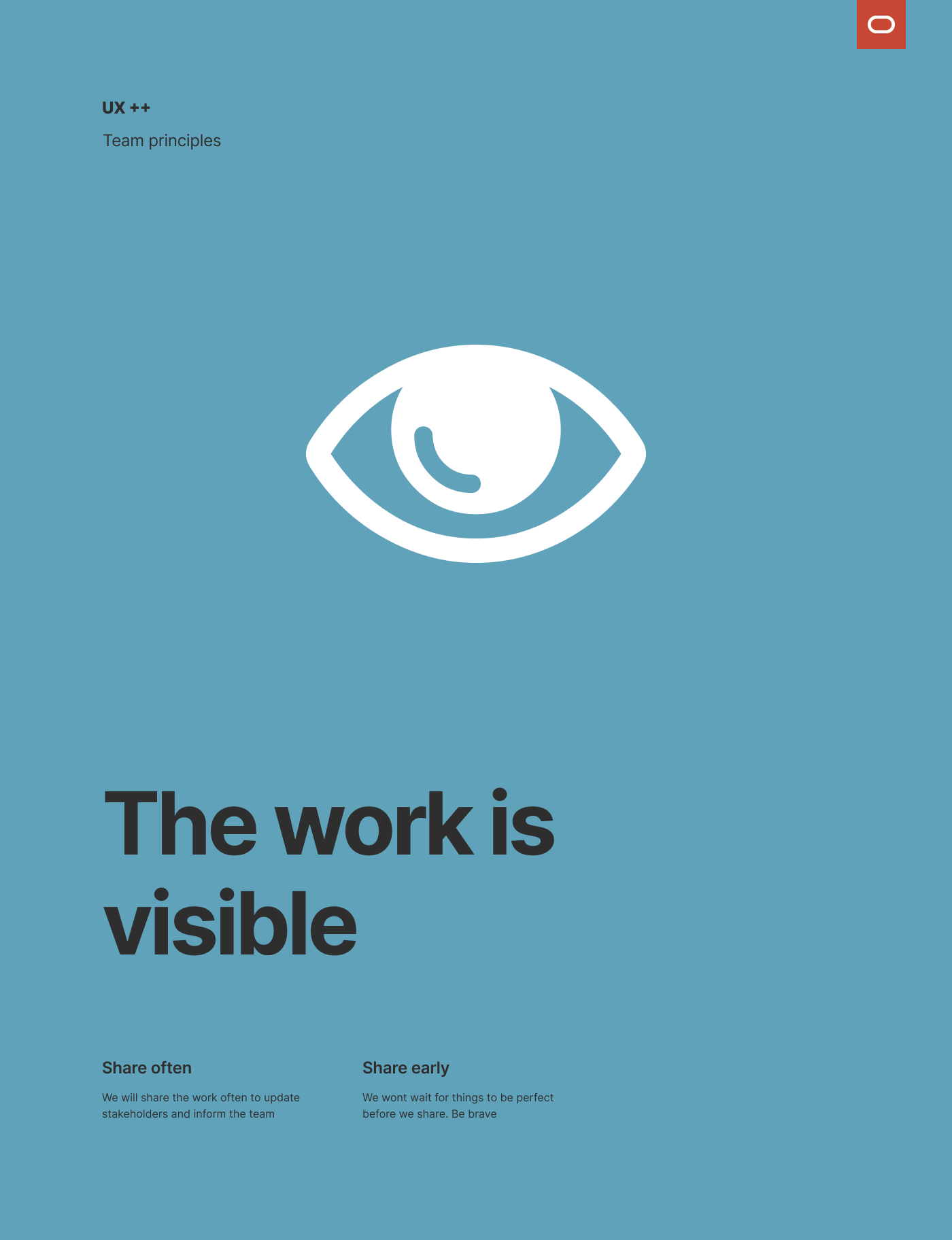
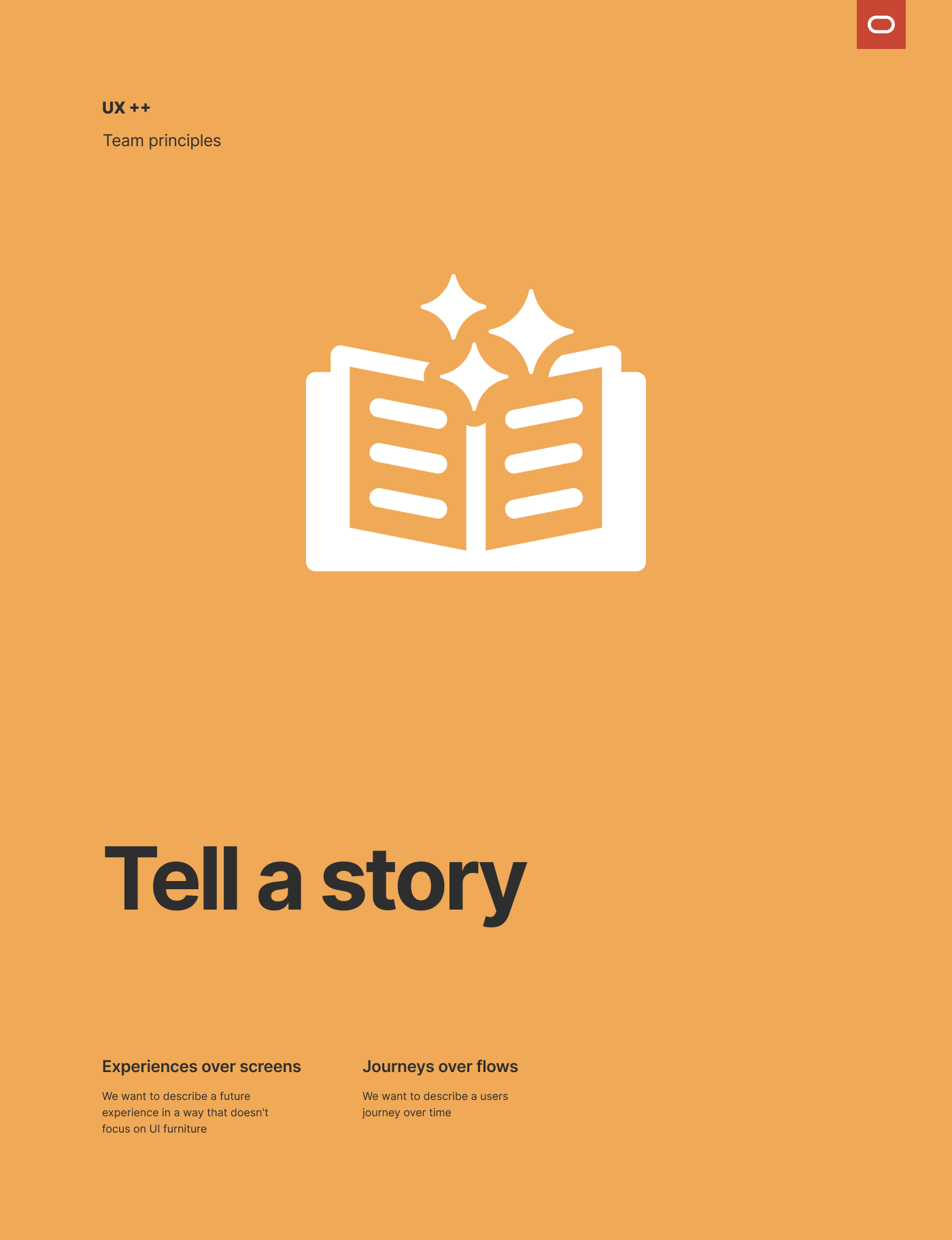
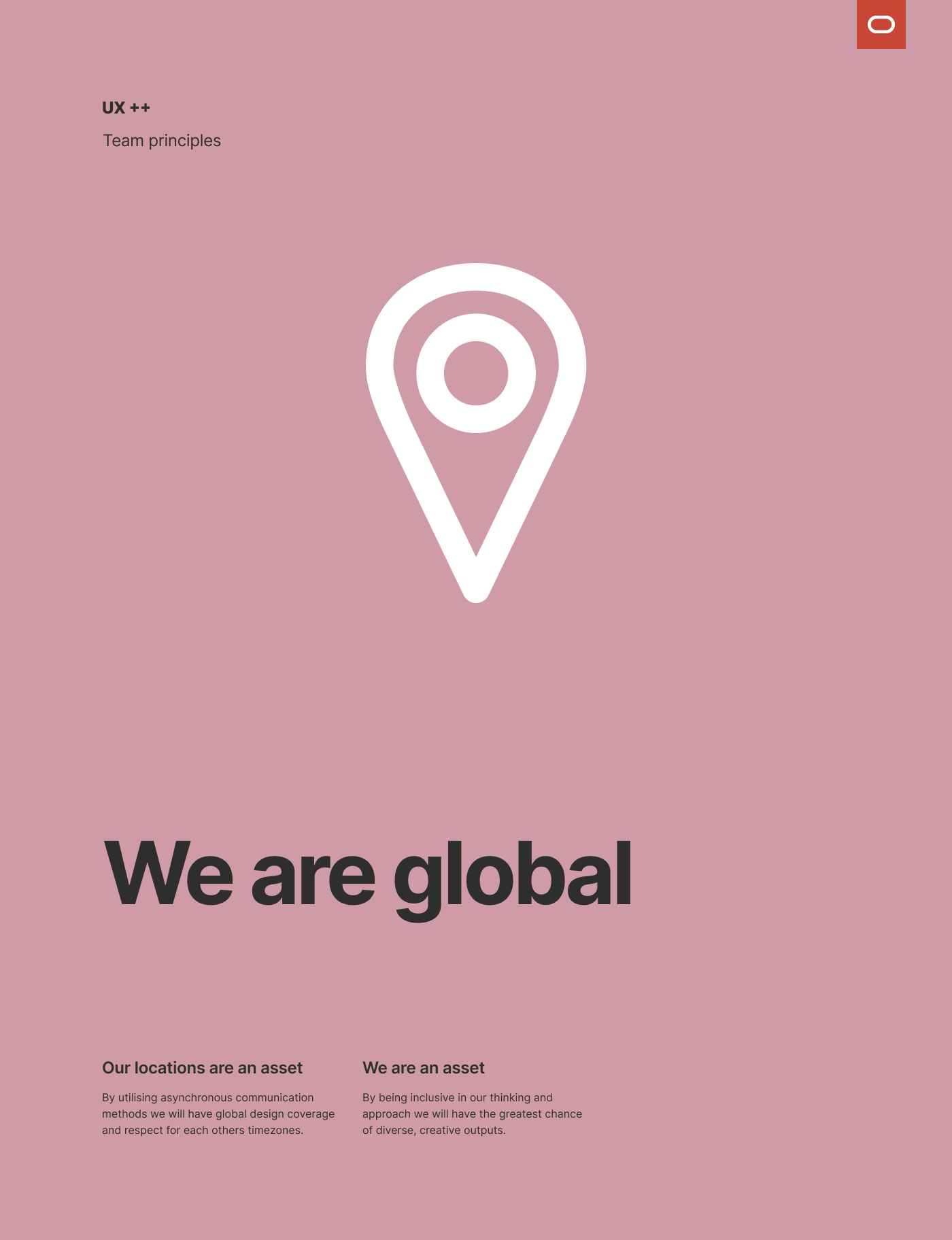
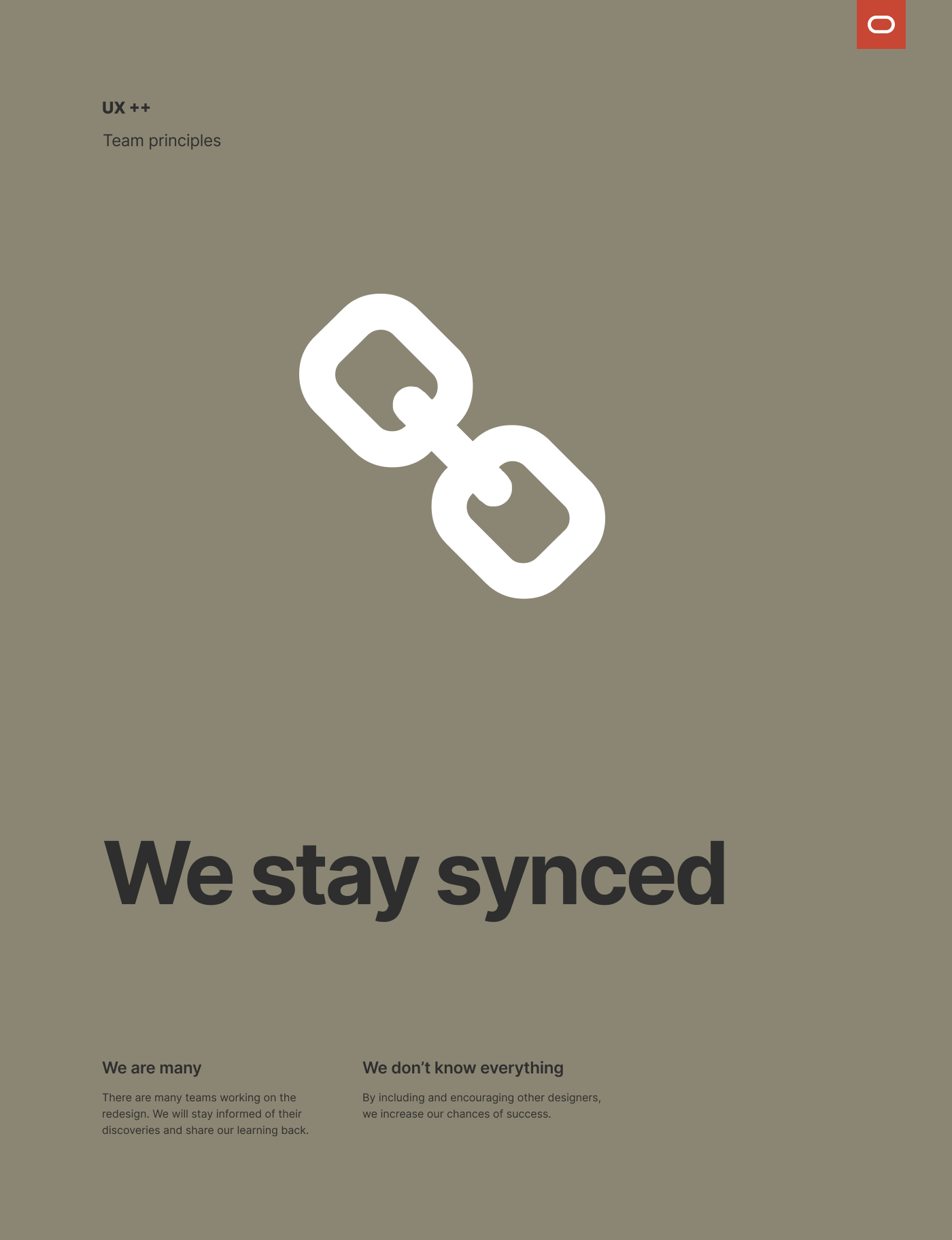
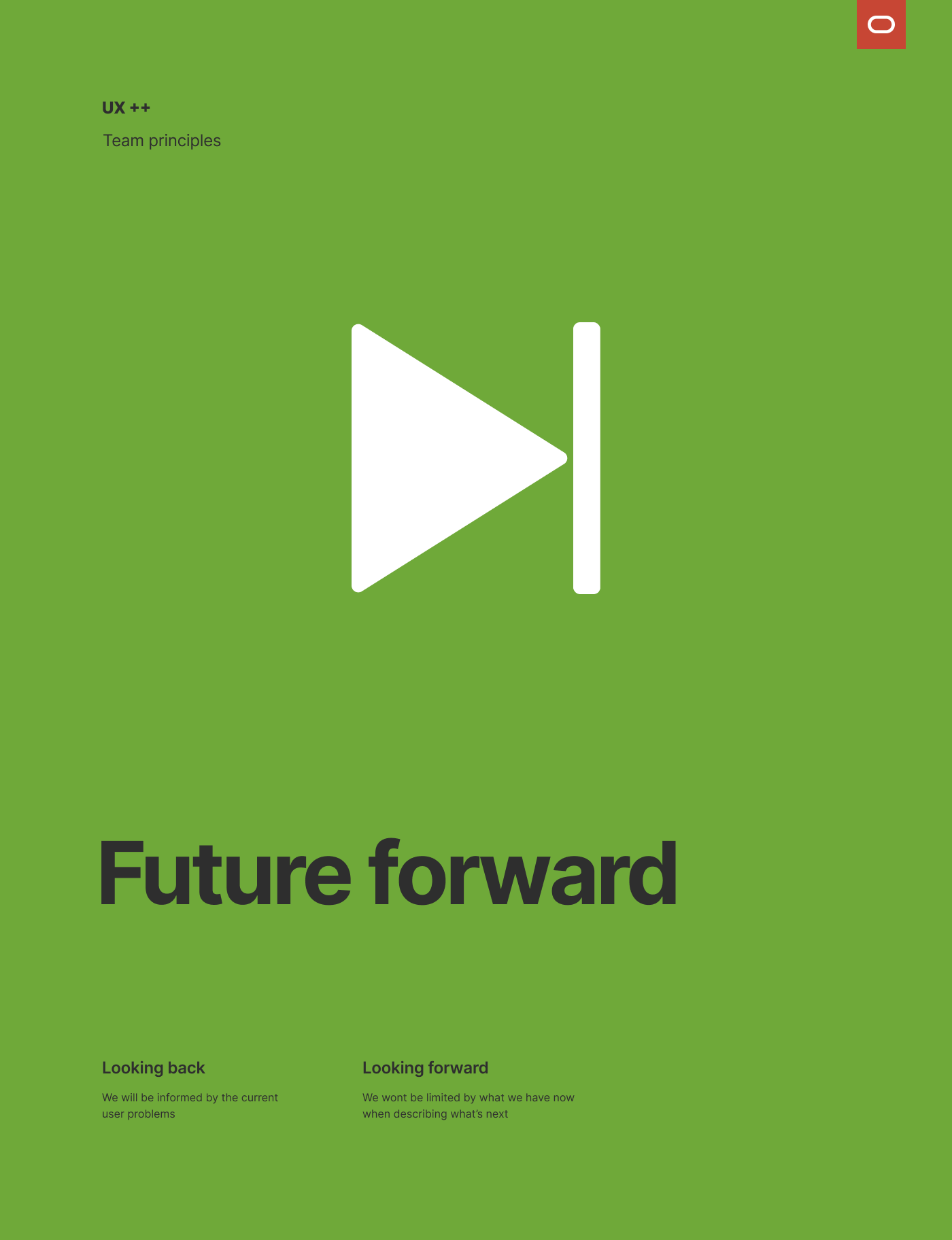
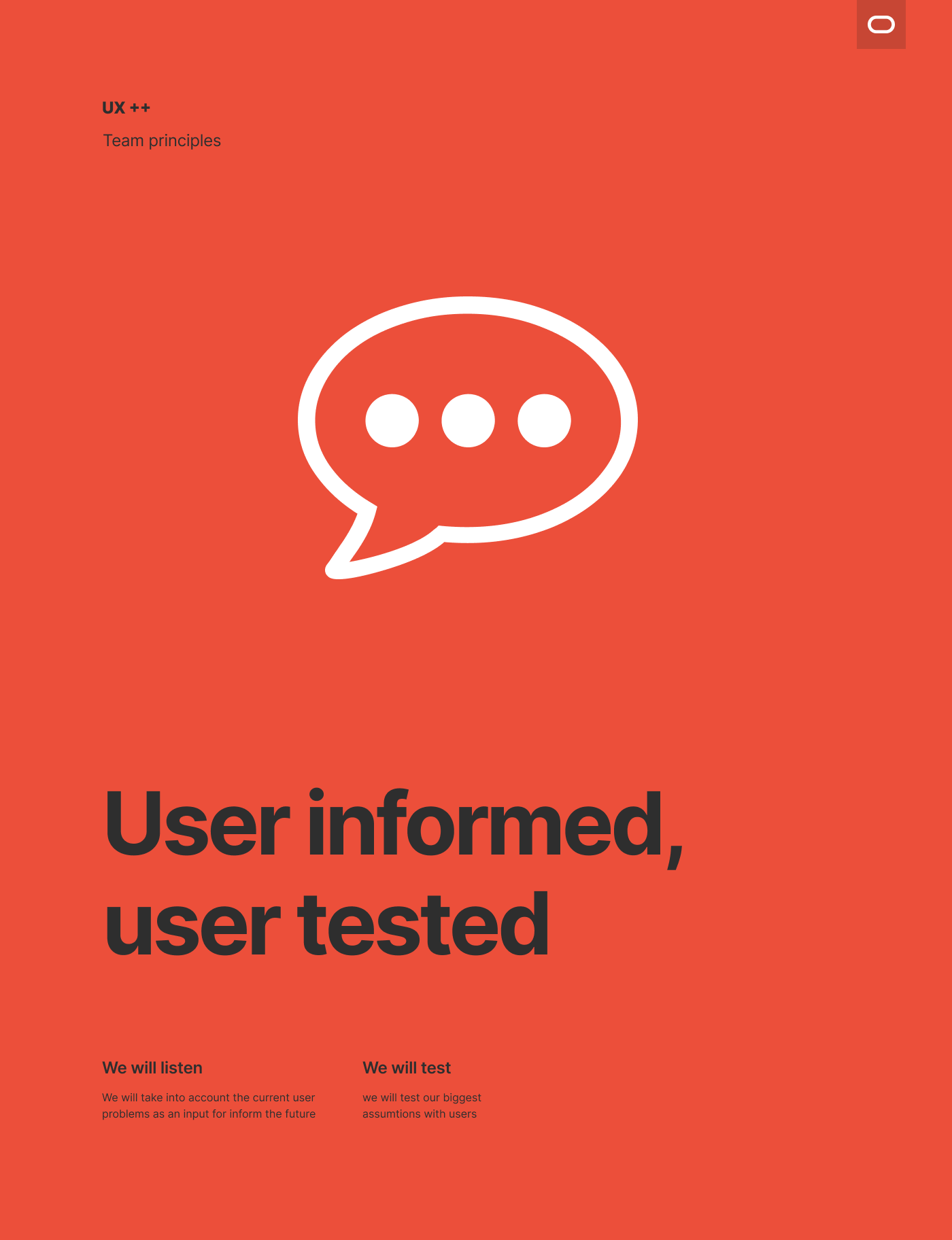
From our kickoff and immersion sessions, I created a set of working principles that shaped our culture and collaboration throughout the project.
Next steps
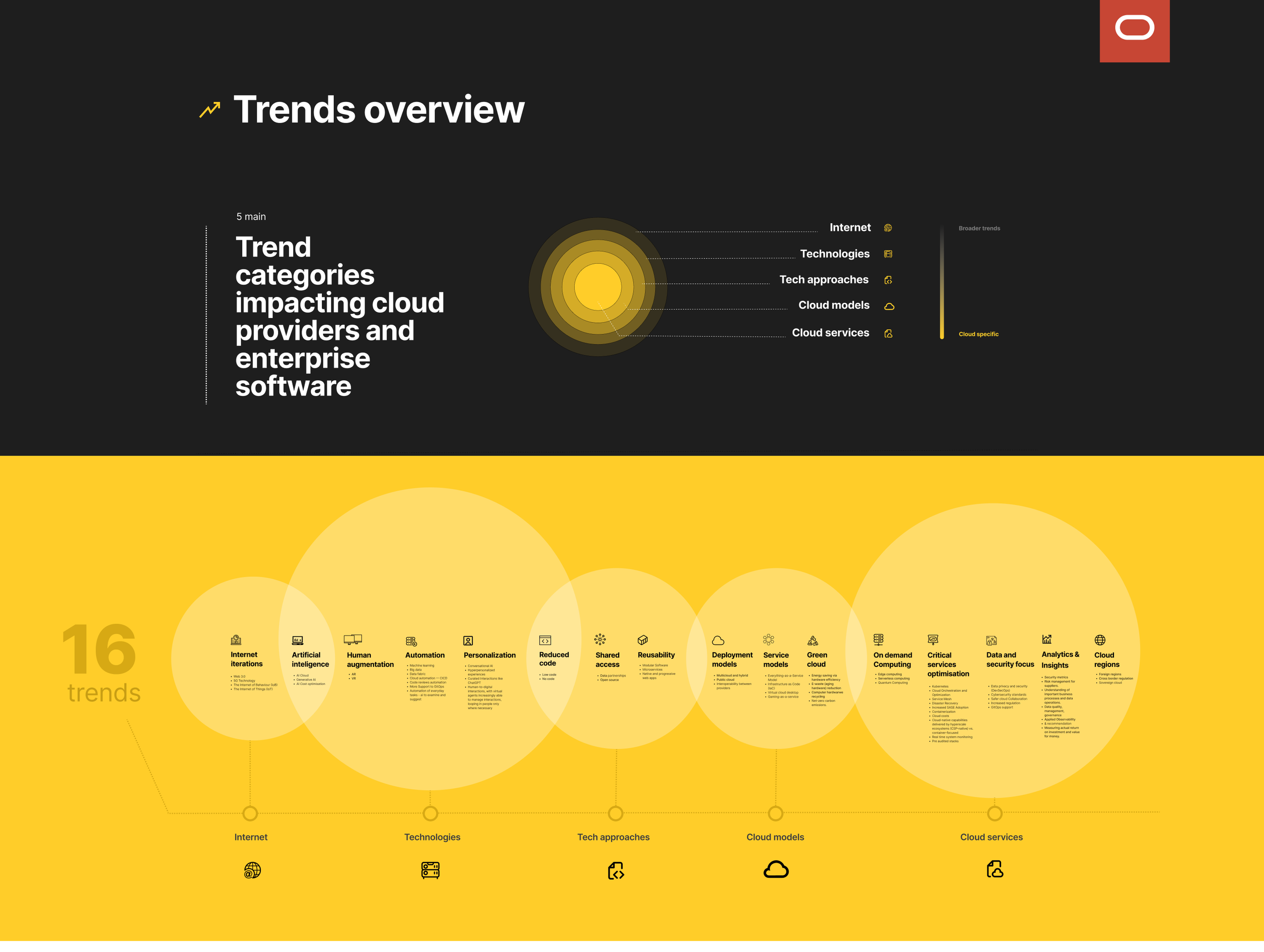
To stimulate discussion and immerse ourselves in the space, I assigned the team some desk research.
- Trends in cloud
- Trends in enterprise software
- Future trends
- Existing OCI user research
Desk research output
User Journeys
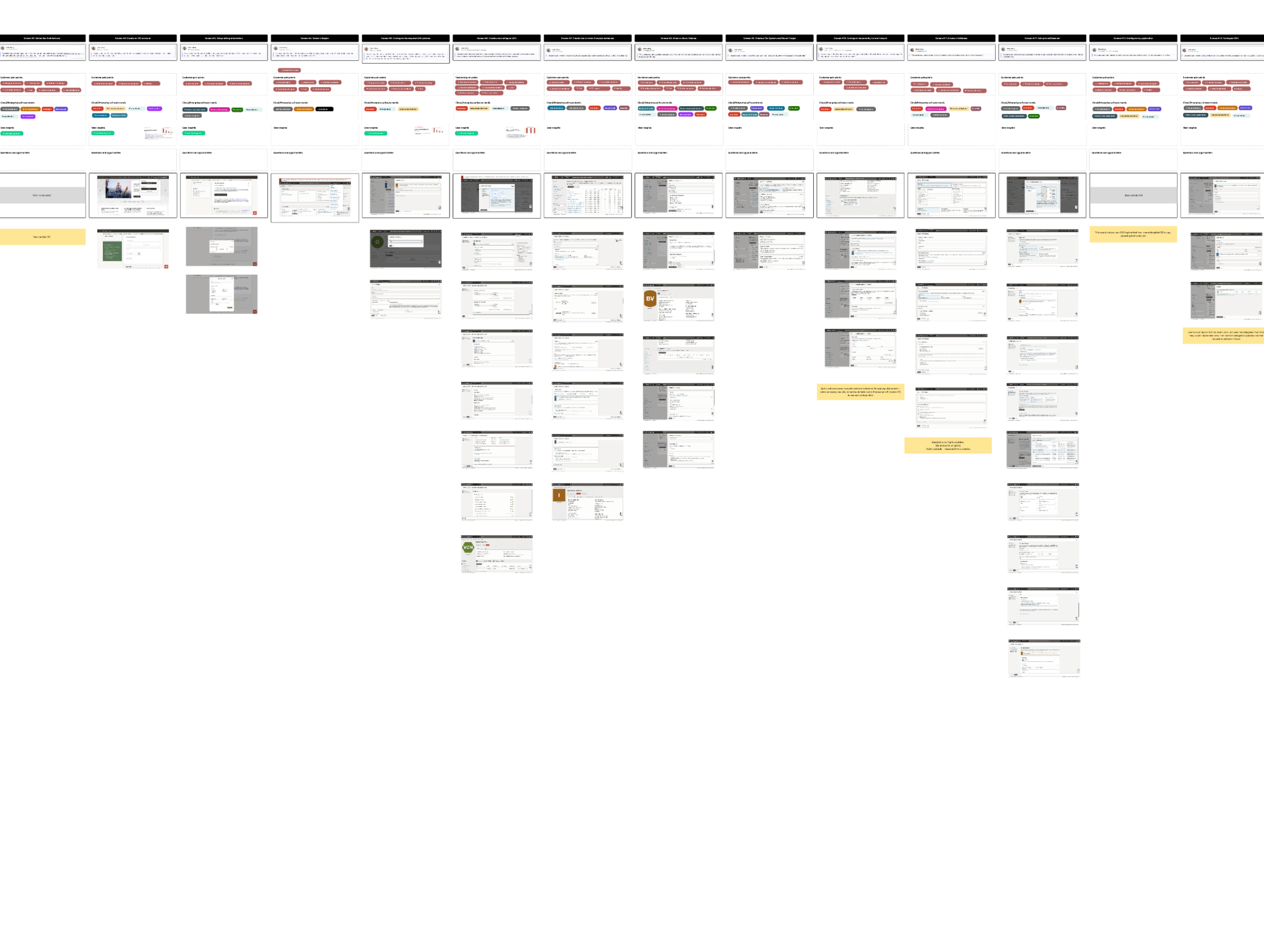
By combining workshop insights with desk research and mapping them onto existing user journeys, we found not just gaps but the bigger structural changes worth making.
Opportunity mapping
Generating Ideas
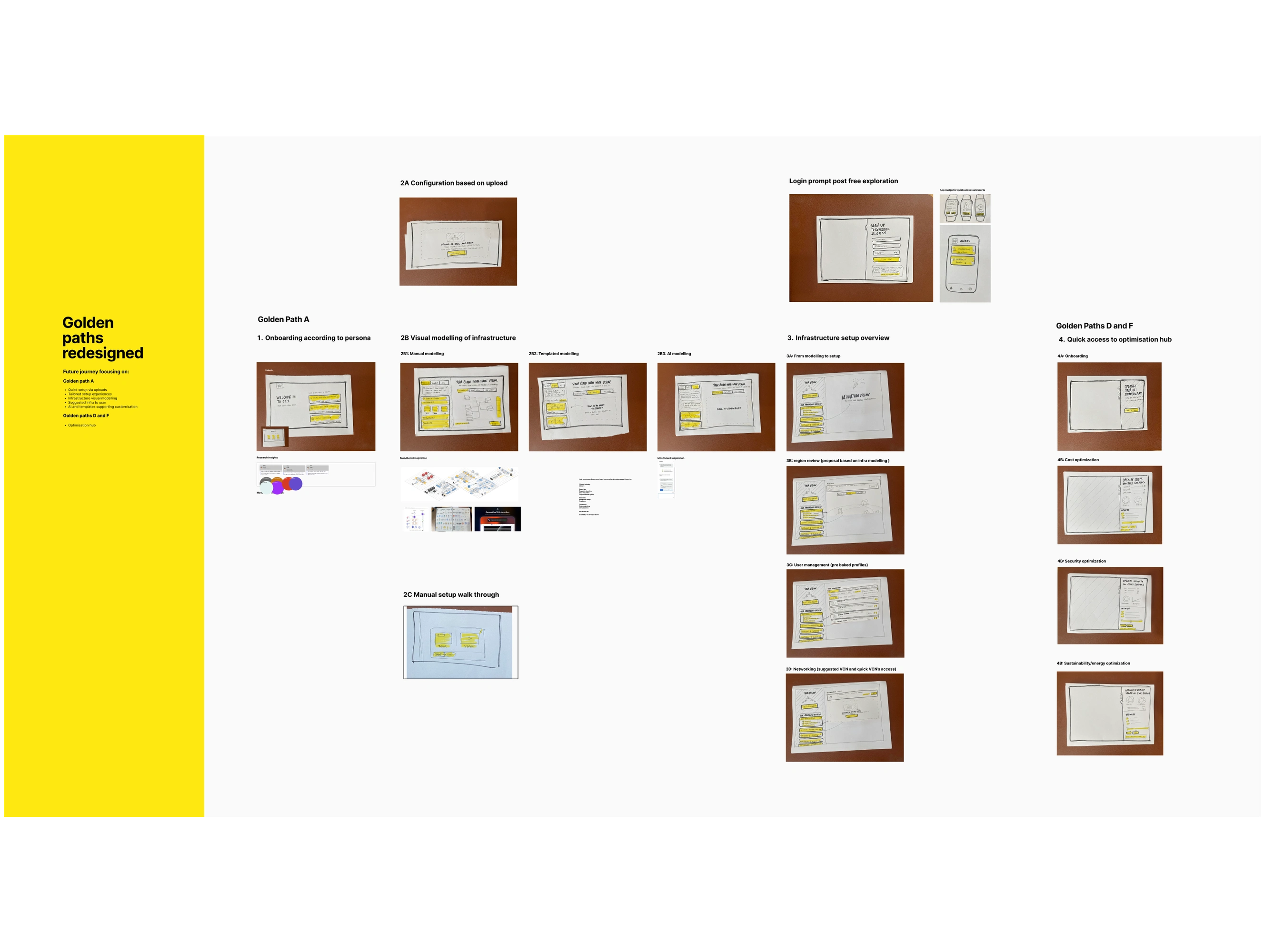
I led fast sketching sessions to generate a wide range of concepts for reimagining user journeys.
Working with the team, we landed on two priority areas:
- AI assistance to simplify and accelerate complex workflows
- A new visual model for representing user infrastructure
Sketching ideas
Delivery
AI Assistance
The Oracle Cloud Console contains many complex flows and forms that place a heavy burden on users.
Our concept explored how AI could transform this experience, learning from a user's infrastructure needs (and those of similar users) to auto-fill forms based on key parameters set by the user.
The assistant would then provide clear explanations of what was generated and why, while still giving users full control to edit or regenerate from a different set of parameters.
The concept showed how AI could make the console genuinely smarter, not just faster.
Prototype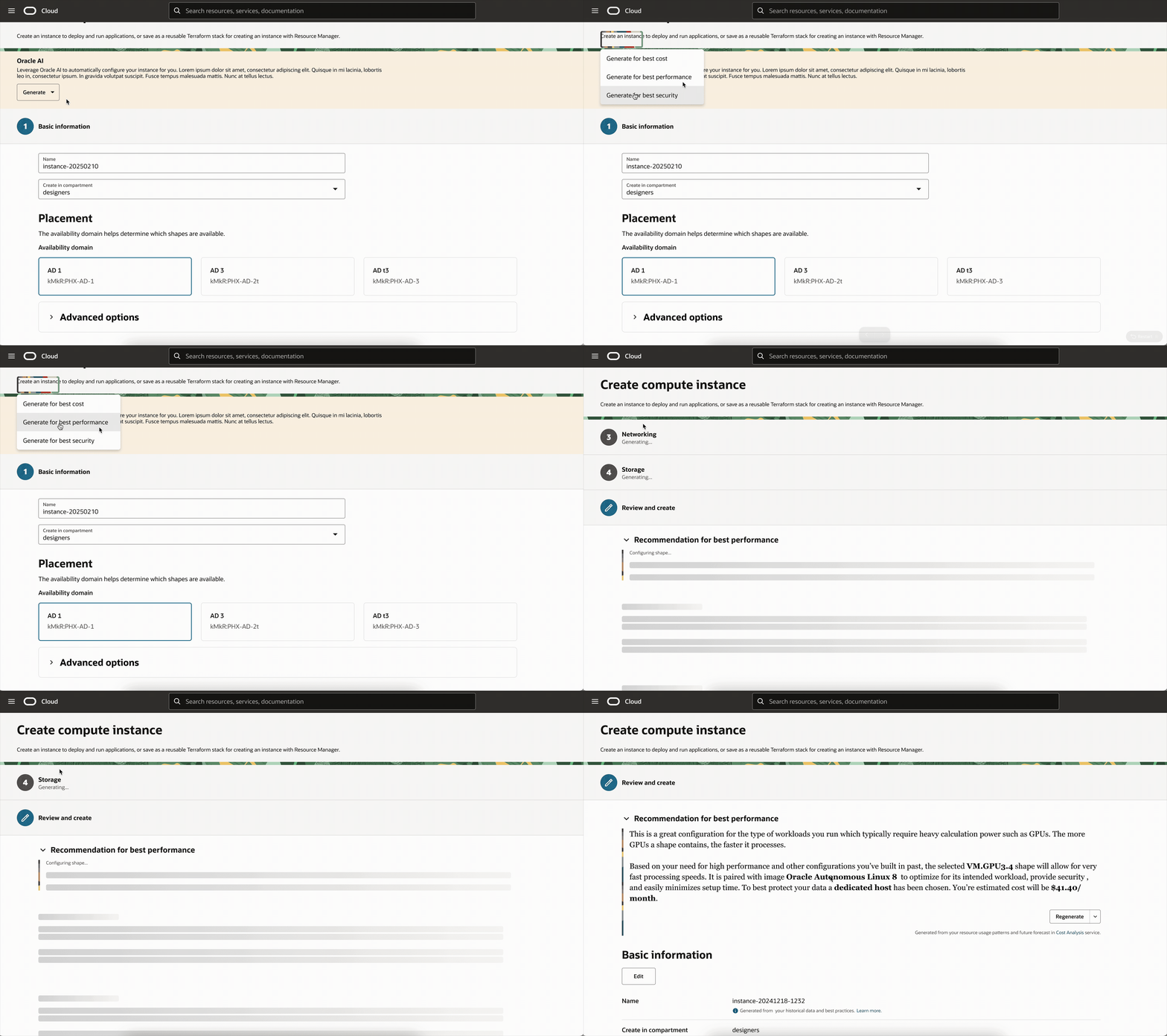
A New Way to Navigate and Visualize Infrastructure
Currently, the console organizes services by type, creating a fragmented experience where users must jump between sections to diagnose issues or make changes.
Our concept reorganised the console around how users actually think about their infrastructure. Instead of service silos, everything would be grouped under applications the user defines. Troubleshooting and making changes becomes far more intuitive when the structure matches the work.
Prototype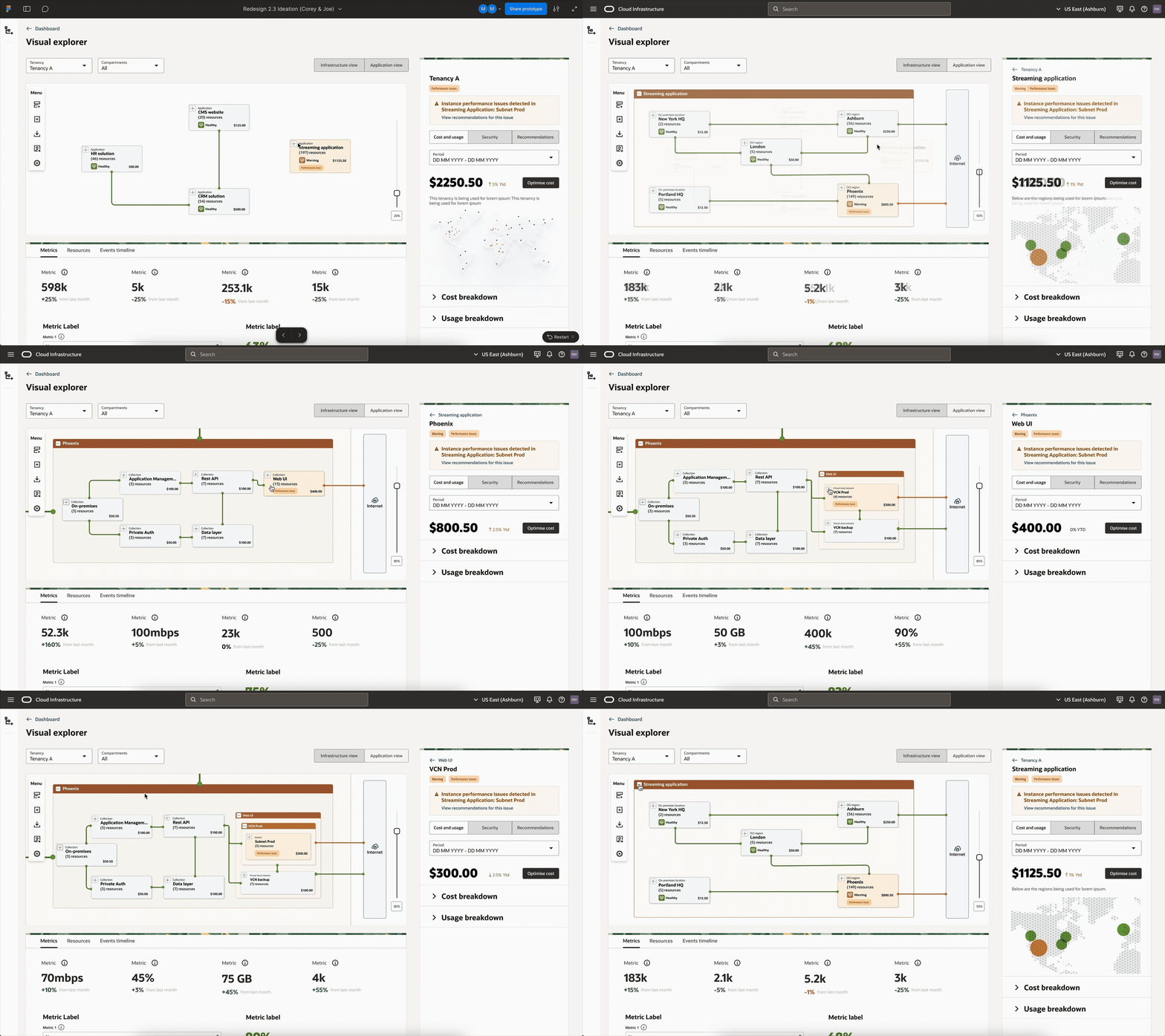
Visualiser
Connect
Open to design leadership roles, manager through director level. Based in the UK, open to remote.